

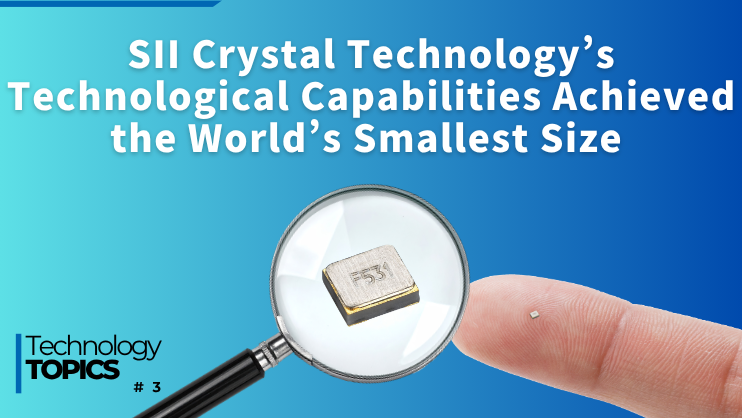
Small Tuning Fork Quartz Crystal Resonators Support the Low Power Consumption of All Electronic Devices
Did you know that tuning fork quartz crystal resonators play a key role in extending the battery life of all kinds of electronic devices, including the laptop PCs, smartphones, and smartwatches you use every day?
SII Crystal Technology Inc., one of the group companies of Seiko Instruments Inc. located in Tochigi City, Tochigi Prefecture, developed the world’s smallest tuning fork quartz crystal resonator, quietly supporting the IoT and wearable era behind the scenes.
This time, we spoke in detail with members responsible for the development and design of tuning fork quartz crystal resonators at the company, covering everything from the basics of quartz crystal resonators to the core of the latest technologies.
What Are Quartz Crystal Resonators Used For?
In modern society, many devices require “precise time.” A representative example is quartz watches. The precise vibrations generated when electricity is applied to the built-in quartz crystal resonator are converted into electrical signals to create a precise one-second interval and move the watch hands.
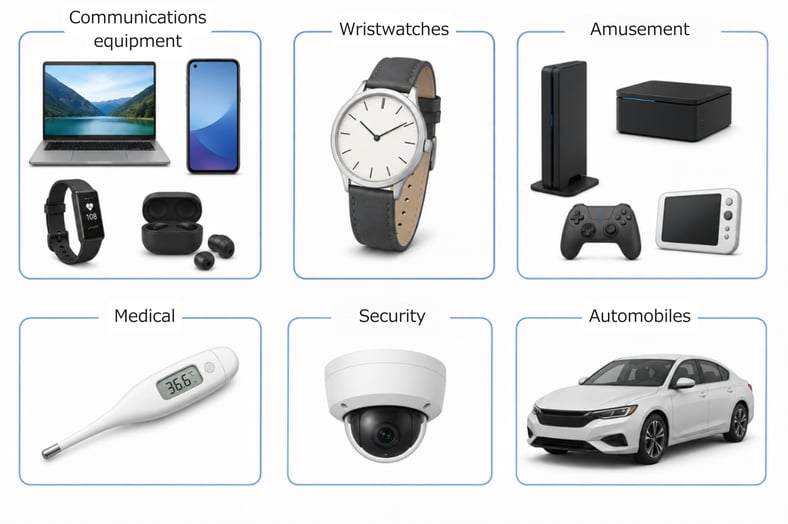
In fact, “precise time” is required not only in watches, but also in a wide variety of devices. Electronic devices contain circuits for CPU processing, communications, data synchronization, and more, and these require reference signals (clocks) that determine when and at what speed they operate. If this timing becomes misaligned, it can lead to malfunctions and communication errors.
Smartwatches, smart rings, smart keys, communication functions in connected cars, and IoT sensors. All of these are equipped with devices that “maintain precise timing.” At the core of this timing control are quartz crystal resonators.
Another important aspect is the issue of reducing power consumption, namely “how to extend battery life as much as possible.” As wearable devices become smaller, the batteries they can accommodate also become smaller. That is why the need to “reduce power consumption as much as possible” continues to grow year by year.
What Is the Principle Behind Quartz Crystal Resonators?
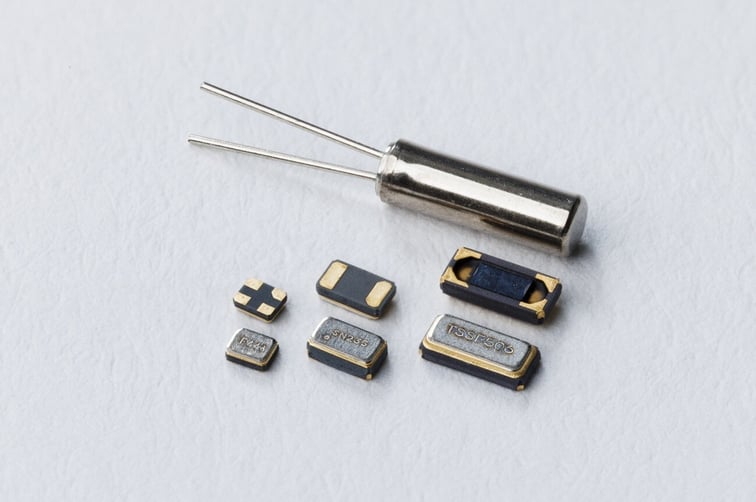
A quartz crystal resonator is a timing device that continues to vibrate regularly at a constant frequency. What enables this function are two properties possessed by quartz crystal.
The first is the “piezoelectric effect,” in which applying force to the quartz crystal generates electrical charge on its surface, producing an electrical signal. The second is the “inverse piezoelectric effect,” in which applying voltage causes the quartz crystal to transform and vibrate. These two properties are used in combination. Voltage is applied to make the quartz crystal vibrate (inverse piezoelectric effect), and the electrical charge generated by the vibration is extracted as an electrical signal (piezoelectric effect). The regular electrical signal generated through this repetition becomes the “reference for keeping time” in devices.
A quartz crystal resonator is a passive component that cannot operate on its own. It oscillates only when combined with surrounding components such as an inverter (oscillation circuit), resistors, and capacitors. For example, in a wristwatch, this oscillation circuit is externally connected to a microcontroller (IC chip), and the oscillated signal is frequency-divided and counted to keep accurate time in units such as “1 second” and “1 minute.”
Frequencies of Quartz Crystal Resonators
There are broadly two types of quartz crystal resonators. They are “AT-cut quartz crystal resonators,” which handle the high-frequency band (MHz range), and “tuning fork quartz crystal resonators,” which handle the low-frequency band (32.768 kHz).
AT-cut quartz crystal resonators are used in applications requiring high-speed processing, such as PC CPU clocks. In contrast, tuning fork quartz crystal resonators operate with low power consumption and continue functioning as sub-clocks that maintain minimum time and timing management even while devices are in sleep mode, thereby helping reduce battery consumption.
Because these two types serve different roles, they are not competing products, and both are used together in many devices. When the main clock (MHz range) operates, current in the tens of milliamps (mA) flows, whereas the sub-clock (32.768 kHz) operates at the microamp (μA) level, meaning power consumption is less than a few hundredths of that amount. By using the main clock only when the device is actively processing and switching to the sub-clock during standby, battery consumption can be significantly reduced. This difference is especially apparent in wearable devices with small battery capacities, where it directly affects battery life.
SII Crystal Technology has been developing and mass-producing tuning fork quartz crystal resonators for more than half a century.
Chasing the World’s Smallest Size | The Birth of the “SC-10S”
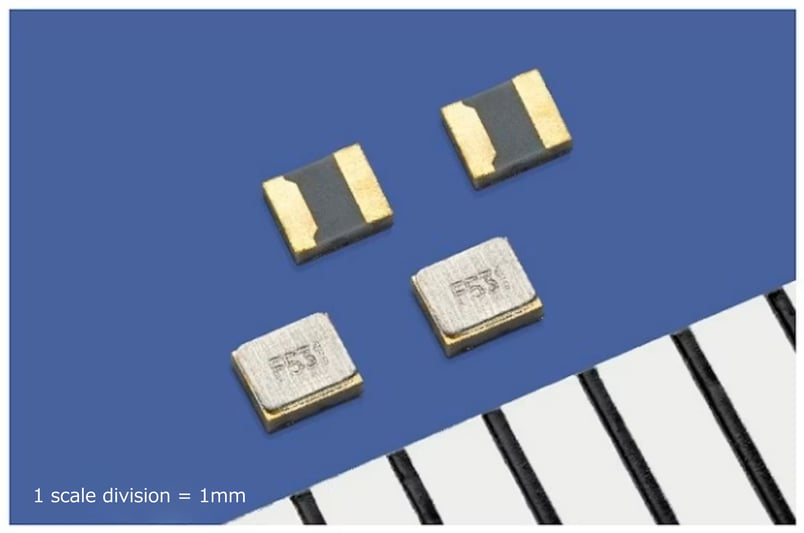
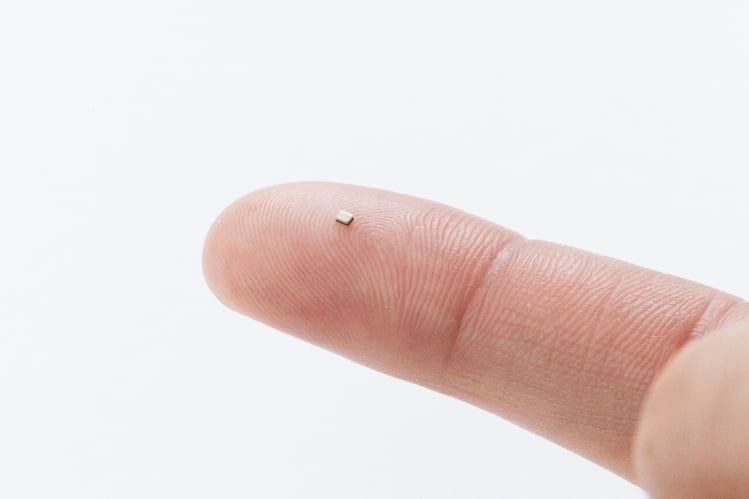
In December 2025, SII Crystal Technology announced the start of mass production of the world’s smallest tuning fork quartz crystal resonator※, the “SC-10S.”(As of November 2025, based on our research)
Although various manufacturers in the industry produce quartz crystal resonators, many companies have shifted toward high-frequency (MHz range) development, and only a limited number focus on miniaturization in the 32.768 kHz range.
According to the developers, the company has an advantage in miniaturization technology for the 32 kHz range and possesses one of the industry’s top mass-production track records in the SC-12S (1.2 mm × 1.0 mm). Furthermore, for the SC-10S (1.0 mm × 0.8 mm), competing companies had reportedly not yet developed equivalent products at the time of the press release (December 2025).
The features of the SC-10S are not limited to its “world’s smallest size.” It is also thinner than previous products, making it possible to install in ultra-thin devices such as smart rings. In addition, it maintains low power consumption characteristics, resulting in a product that combines compact size, thinness, and low power consumption.
Overcoming the Barriers to Miniaturization
Although the SC-10S finally achieved mass production, the development of the world’s smallest size reportedly involved numerous barriers that had to be overcome.
Barrier to Miniaturization ① R1 (Series Resistance Value)
One of the most important indicators representing the performance of tuning fork quartz crystal resonators is “R1 (series resistance value).” It refers to the electrical resistance value when the two arms (vibrating sections) of the quartz crystal, which literally has a tuning fork shape, vibrate. The lower this value, the less energy is required for vibration.
According to the person in charge, while larger arm sizes in quartz crystal resonators make it easier to obtain the piezoelectric effect and keep R1 low, miniaturization tends to increase R1 as volume decreases.
Barrier to Miniaturization② Mounting Technology
In addition to the R1 issue, mounting technology capable of “accurately installing precision elements inside a small package” is also a major challenge.
.png?width=789&height=581&name=Lid%20(metal%20cover).png)
At a size of 3.2 mm × 1.5 mm, there is sufficient space between the chip and the case, allowing manufacturing equipment precision to handle the process. However, with the “SC-10S” size of 1.0 mm × 0.8 mm, the clearance inside the package becomes extremely tight. If the chip is mounted even slightly tilted, it will contact the lid, preventing the original oscillation characteristics from being achieved.
The development team recalls as follows. “The technology required to mount components while maintaining mass productivity at a consistent level of precision was a challenge we encountered for the first time at the 1.0 mm × 0.8 mm size. It required steadily overcoming issues one by one.”
How did SII Crystal Technology overcome these “barriers to miniaturization”? Let us examine the proprietary technologies the company has accumulated one by one.
PEQ Technology | Manufacturing Process of Quartz Crystal Resonators
At the center of the manufacturing process for tuning fork quartz crystal resonators is “PEQ (Photo Etched Quartz)” technology. PEQ technology applies photolithography technology similar to semiconductor pre-processes, while incorporating numerous innovations unique to quartz crystal processing.
Manufacturing is carried out in a clean room and consists of three major process steps.
- Apply photoresist (photosensitive material) to the wafer, expose it to light, transfer the resonator shape pattern, and develop it for patterning. (Photolithography Process)
- Dissolve and remove unnecessary portions using a chemical solution (etching solution) to form the external shape and electrode shape. (Etching Process)
- While measuring frequency on the wafer, remove the metal film with a laser to adjust the frequency. (Testing Process)
H-Shaped Structure and Reduction of Energy Loss
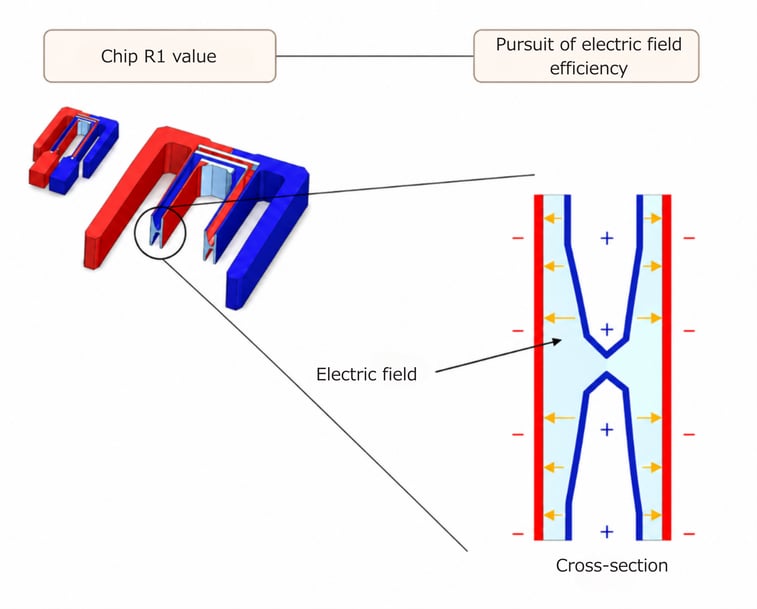
The shape of the two arms of a tuning fork quartz crystal resonator directly affects performance. Particularly noteworthy is the cross-sectional shape known as the “H-shaped structure.”
In the H-shaped structure, grooves are formed in the cross section of the arms, and electrodes are formed three-dimensionally within them, enabling efficient extraction of charge generation through the piezoelectric effect. This generates an electric field in the lateral direction, achieving a higher piezoelectric effect even at the same size.
The technology development team has pursued vibration systems with reduced energy loss through innovations in vibrating arm design. They also stated that uniquely formulated chemical solutions for PEQ etching were indispensable for forming groove shapes with high precision.
Based on hydrofluoric acid chemical solutions, proprietary recipes were blended and adjusted to establish etching conditions capable of reproducing the H-shaped structure. Furthermore, detailed know-how has been accumulated, such as using different chemical solutions for the process that forms the inner shape of the quartz crystal and the process that cuts the outer shape.
Development of Custom Manufacturing Equipment
In quartz crystal resonator manufacturing, there are many cases where standard semiconductor manufacturing equipment cannot accommodate the required processes.
At development sites, many processes reportedly cannot be handled with commercially available equipment alone, so dedicated equipment is developed in cooperation with equipment manufacturers. Even the automatic wafer transfer systems were jointly developed based on the company’s own required specifications.
This is not simply the “introduction of off-the-shelf equipment.” The company brings its manufacturing know-how as a user and works through dialogue with equipment manufacturers to create one-of-a-kind custom manufacturing equipment. In a sense, the company is designing and building its own factory capable of producing the world’s smallest quartz crystal resonators.
Vacuum Sealing Technology
Quartz crystal resonators are sealed within ceramic packages and metal lids, and the inside must be maintained in a vacuum state. This is because if the environment is not vacuumed, R1 (series resistance value) will not indicate normal values and proper performance cannot be achieved.
The greatest challenge during sealing is “outgassing” generated from materials during welding. If welding is performed thoroughly, airtightness improves, but the amount of generated gas also increases. Conversely, reducing welding decreases gas generation but lowers airtightness.
The person in charge explains as follows. “How to optimize welding conditions. That is where the real expertise is demonstrated. Some competitors use getter materials (adsorbents) inside the package so that even if gas is generated, it can be absorbed to increase vacuum levels. However, using getter materials increases material and processing costs. We have established proprietary technology that enables highly airtight sealing at any size without using getter materials.”
Fusion of Simulation and Experimentation
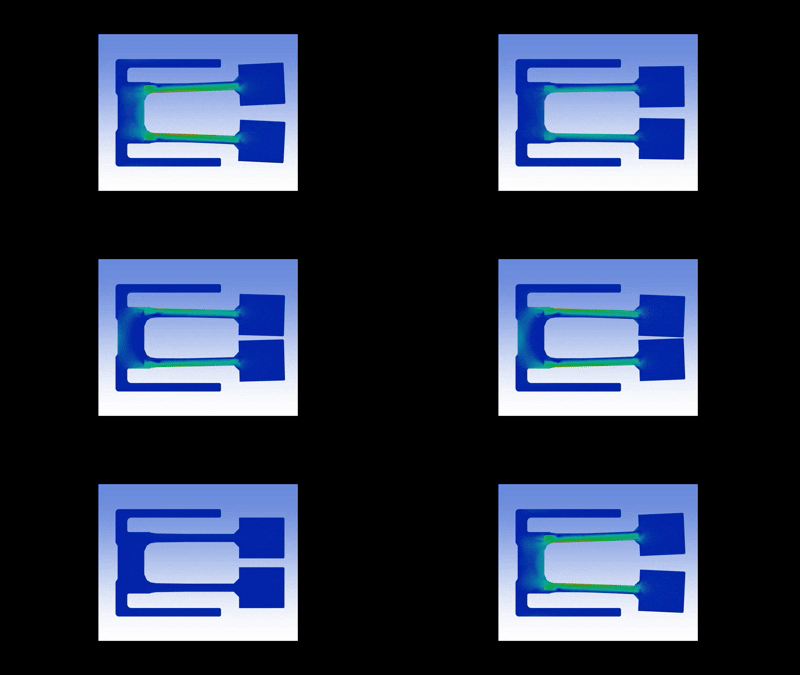
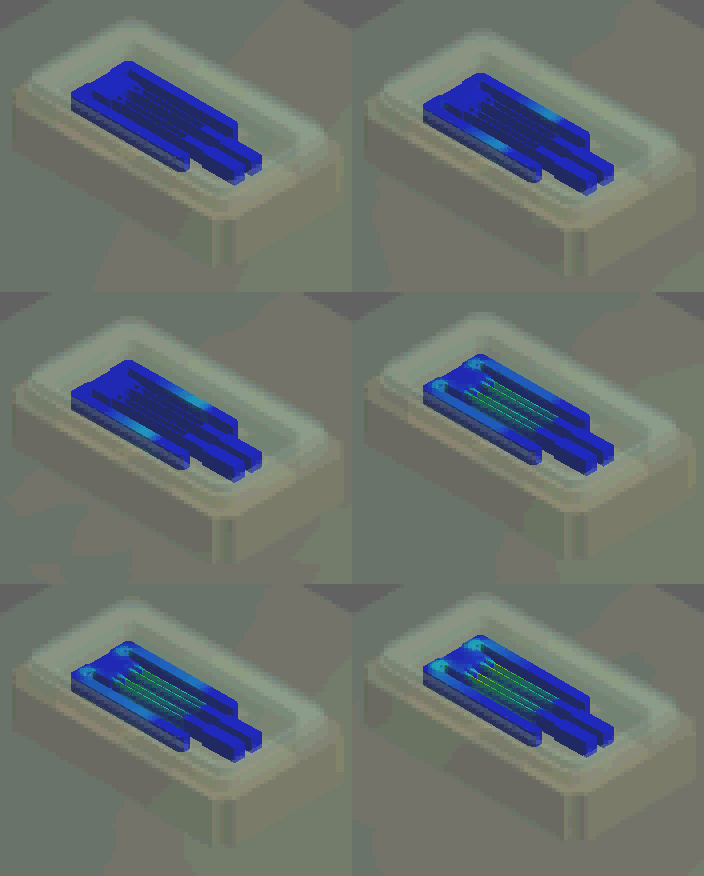
In design, the process begins by using computer simulations to analyze vibration modes and stress distribution in order to identify where stress tends to concentrate and where breakage is likely to occur.
However, in the quartz crystal industry, there are still many cases where sufficient data and technology have not yet been accumulated to solve all design issues through simulation alone. Ultimately, experimental verification remains indispensable.
The design engineer explains as follows. “After determining the general framework through simulation, we create multiple samples while finely varying dimensions and identify the optimal point by confirming how each dimension affects characteristics. What we possess is know-how that cannot be derived through simulation alone.”
Quality Advantages Created Through Integrated Domestic Production

In today’s era of global specialization, SII Crystal Technology adheres to a single philosophy. It is integrated domestic production in which “everything from quartz crystal wafer processing to packaging and inspection is performed at a single site in Tochigi City, Tochigi Prefecture.”
While competitors have relocated manufacturing bases to countries with lower labor costs such as China, Vietnam, and Malaysia, the company has continued integrated production in Japan. This is described as an “almost stubborn level of commitment.”
According to a company representative, the company is one of the few manufacturers that completes everything from quartz crystal wafer processing to packaging and inspection at a single domestic site. Compared with overseas production, the company has advantages in contamination control and reportedly experiences almost no quality complaints.
In addition, having all processes at the same site enables a response speed to quality issues that clearly distinguishes the company from competitors should any problems arise.
The development engineer explains as follows. “For manufacturers that produce overseas in dispersed locations, investigation and response when problems occur take time. Because we perform all processes in one location, we can immediately identify causes and respond if issues arise. This can be said to be a quality assurance system that competitors cannot easily imitate.”
SII Crystal Technology Provides an Environment Where Every Aspect of Manufacturing Can Be Experienced
Finally, we asked the members to comment on the appeal of SII Crystal Technology.
“In modern manufacturing, horizontal specialization is the mainstream. It is common for companies to handle design internally while outsourcing manufacturing to foundries (specialized contract manufacturers). However, we do everything in-house, from material processing to assembly, packaging, and finished product evaluation. For people who truly love manufacturing and are interested in everything, I think this is a very unique environment where many different experiences can be gained.”
“In the quartz crystal industry, unlike semiconductors, there are few established textbooks or online resources, so there is a culture of formulating hypotheses ourselves, conducting experiments, and finding the answers. And the products we develop are installed in watches, smartwatches, and IoT devices around the world, with hundreds of millions of units shipped every month. I think being able to experience that firsthand as an engineer is one of the major attractions of working here.”
At SII Crystal Technology, developers continue to build upon scientifically grounded development every day. Those accumulated efforts culminated in the title of “world’s smallest.” Packed inside quartz crystal resonators measuring less than 1 mm are technologies that can truly be described as the essence of Japanese manufacturing.
Interview cooperation
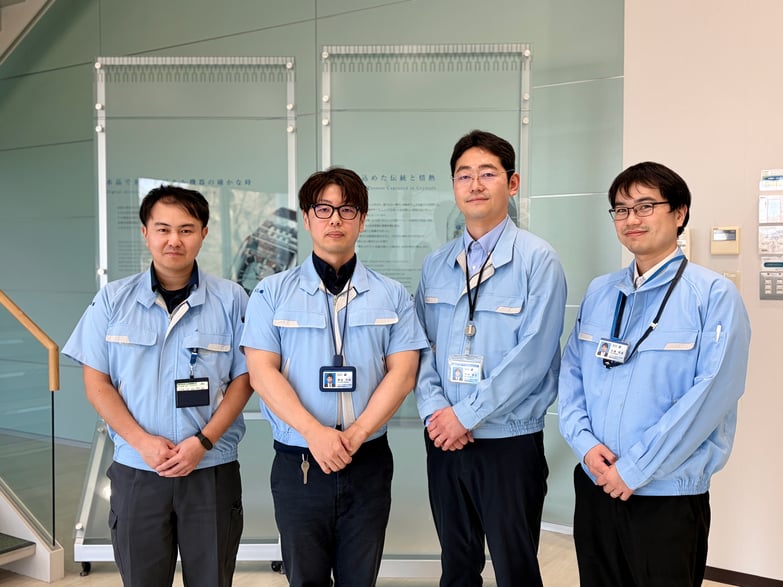
From left: Technology Development Department Section 2, Mr. Koizumi; Section Manager Mizobe;
Technology Development Department Section 1, Section Manager Ichimura; Mr. Kato.