Many products around us are expected to rotate quietly, move smoothly, and remain usable for many years. Home appliances, computers, automobiles, medical devices, robots, semiconductor manufacturing equipment, and many other products that support our daily lives and industry depend on high levels of precision in areas that cannot be seen.
One particularly important area is the inside of a component—in other words, the internal surface of a hole. These include holes through which rotating shafts pass, holes in which bearings are fitted, and holes that allow components to fit together precisely. Even a slight loss of accuracy in these internal surfaces can increase vibration, noise, heat generation, and wear, affecting the performance and service life of the final product.
For many years, the Precision Products Division of Seiko Instruments has focused on technologies for finishing these “invisible internal surfaces” to a high degree of precision. Internal grinding machines are machine tools that grind the internal surfaces of component holes with micron-level accuracy, supporting product performance and reliability. Although this technology is difficult to see from the outside, it supports manufacturing quality from within.
What Is an Internal Grinding Machine?
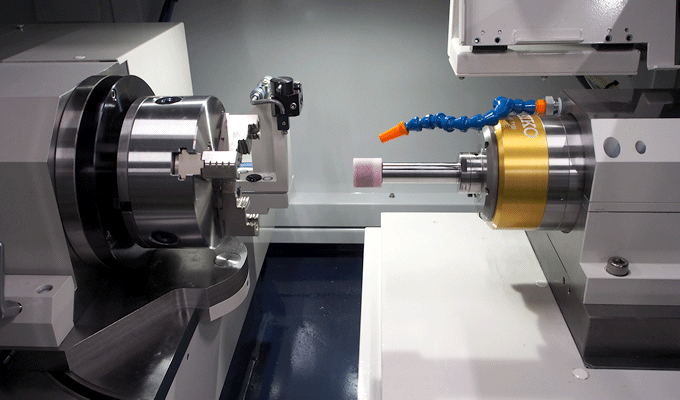
An internal grinding machine is a machine tool that rotates a grinding wheel at high speed to precisely finish the internal surfaces of holes in metal and other components. While the workpiece is rotated, a slender grinding wheel is inserted into the hole to finish its internal diameter, geometry, and surface.
The required accuracy involves more than simply ensuring that the hole is the correct size. Multiple accuracy requirements must be satisfied simultaneously, including roundness, which indicates how closely a circular shape approaches a perfect circle; coaxiality, which indicates how accurately the central axes of holes are aligned; surface roughness, which indicates how smooth the machined surface is; and cylindricity, which indicates how straight and uniform the cylindrical surface is.
At first glance, grinding an internal surface may appear to be a simple process. In practice, however, the grinding point is located deep inside the component, and the grinding wheel and spindle used are slender. Even slight runout or thermal effects are directly reflected in the machining accuracy. The process becomes even more difficult as components become smaller and their holes become narrower and deeper.
An internal grinding machine is therefore not merely “a machine for grinding small holes.” It is a precision machine tool that balances vibration, heat, positioning, rotation, and control at an extremely high level.
Challenges of Small-Diameter, High-Precision Machining
%20(2).png?width=742&height=418&name=%E6%8A%80%E8%A1%93%E3%83%88%E3%83%94%E3%83%83%E3%82%AF%E3%82%B9(%E7%B2%BE%E6%A9%9F)%20(2).png)
In recent years, products across a wide range of fields have become smaller, more advanced, and more energy-efficient. As products become smaller, the components incorporated into them must also become smaller. At the same time, however, performance and reliability requirements continue to increase.
For example, components used in compact motors, precision mechanisms, medical devices, robotic joints, and semiconductor-related equipment must deliver high rotational accuracy, durability, and quiet operation despite their small size. Miniature bearings are one such example. Even in a very small component, slight variations in the internal diameter can affect vibration, wear, and smooth operation.
In small-diameter, high-precision machining, results are influenced by numerous factors, including machine rigidity, the rotational accuracy of the grinding wheel spindle, vibration suppression, compensation for thermal displacement, and the selection of machining conditions. The required precision cannot be achieved through any one technology alone. It requires the ability to build accuracy into the machine as a complete system.
The Precision Products Division of Seiko Instruments has extensive experience in the field of small-diameter, high-precision machining. Rather than simply making machines larger and more rigid, it has achieved stable machining by integrating the required functions within a limited space and optimally combining the machine structure, high-precision components, high-speed spindles, control systems, and other technologies.
Seiko Instruments’ Strength Lies in Its Comprehensive Ability to Engineer the Entire Machine
 One component essential to maintaining the accuracy of an internal grinding machine is the grinding wheel spindle, which rotates the grinding wheel at high speed. The grinding wheel spindle can be described as the heart of the internal grinding machine. Although it must rotate at high speed, vibration must be minimized as far as possible, as even slight vibration can affect both the quality of the machined surface and dimensional accuracy.
Seiko Instruments’ strength lies in the expertise it has accumulated in achieving precision across the entire machine, including the grinding wheel spindle. Rather than focusing solely on the performance of the spindle itself, it considers the machine structure, high-precision components, high-speed spindles, control systems, thermal stability, and machining conditions as an integrated whole and optimizes them to achieve the best possible performance.
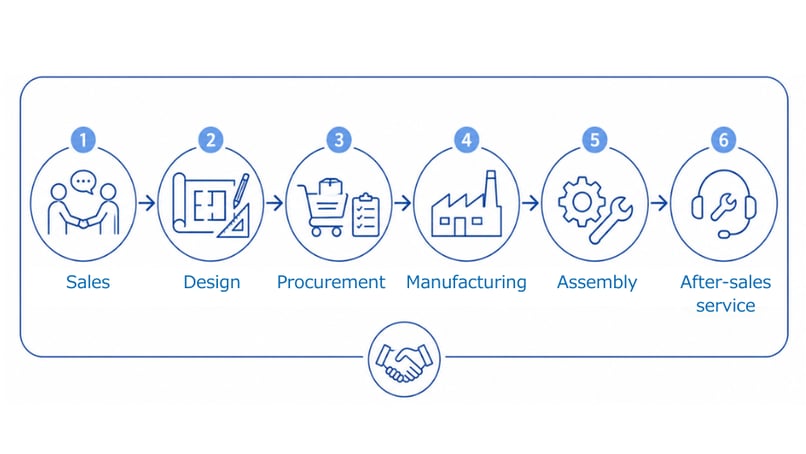
Seiko Instruments is also involved throughout the entire manufacturing process, from sales, design, and procurement to production, assembly, and after-sales service. Its ability to understand customer requirements and issues encountered at production sites and translate them into improvements in design, manufacturing, and machining conditions is a major strength.
Rather than simply selling internal grinding machines, the division can work collaboratively to address the specific challenges faced by each customer, such as “We want to machine this workpiece,” “We want to achieve even greater accuracy,” or “We want to modify our existing equipment so that we can continue using it.” Through this flexibility and strong on-site support capabilities, Seiko Instruments delivers value to its customers.
On-Site Expertise Focused on Customer Challenges
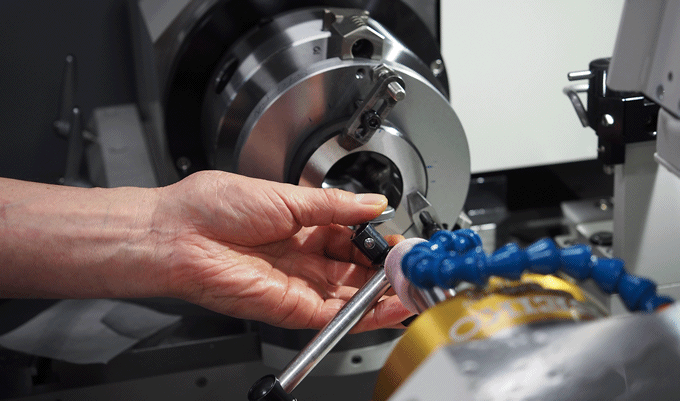
The work involved with internal grinding machines does not end once the machine has been delivered. At actual production sites, various issues can arise depending on factors such as the material and shape of the workpiece, machining conditions, and the operating environment. Customers may find that the required accuracy cannot be achieved, the machined surface is unstable, or the cause of a problem cannot be immediately identified. In such situations, it is necessary not only to understand the machine structure and machining principles, but also to carefully assess what is actually occurring on site.
At Seiko Instruments, the sales, engineering, manufacturing, and service teams work together to investigate the causes of customers’ problems and identify solutions. In some cases, personnel visit the customer’s site to inspect the condition of the machine and examine the machining conditions, the condition of individual components, and recent operating records one by one in order to determine the root cause of the problem.
This type of work also requires experience and practical insight that cannot be fully expressed through drawings and numerical data alone. Seiko Instruments applies the expertise accumulated through many years of experience in the field and uses it to drive further improvements. This continuous process supports customers’ production operations and builds trust.
Seiko Instruments works closely with customers to understand the machining processes and quality levels they seek to achieve and resolve challenges together with them. This approach represents the company’s distinctive on-site expertise and the value it provides through its internal grinding machines.
Expanding Applications and Future Potential
%20(1).png?width=742&height=418&name=%E6%8A%80%E8%A1%93%E3%83%88%E3%83%94%E3%83%83%E3%82%AF%E3%82%B9(%E7%B2%BE%E6%A9%9F)%20(1).png)
In the years ahead, demand will continue to grow for components that are both smaller and more advanced. As electrification progresses, including the widespread adoption of electric vehicles, and as AI data centers expand and semiconductor manufacturing equipment becomes increasingly precise, small, high-precision components will become even more important in emerging fields such as medical devices, robotics, and wearable devices.
In these fields, simply reducing component size is not enough. Products must also provide low noise, energy efficiency, long service life, and high reliability. Achieving these qualities requires greater precision in the internal surfaces of components that support rotational and sliding motion. Higher internal-surface accuracy reduces friction and vibration, helping to improve overall product performance, service life, and energy efficiency.
Internal grinding machines are not a technology that is visible on the surface of finished products. Nevertheless, they support the performance of many products essential to society from within. Though inconspicuous, they are indispensable. This type of precision machining technology will form a foundation for the future of manufacturing.
The Precision Products Division of Seiko Instruments will continue to respond to new needs by drawing on the small-diameter, high-precision machining technologies it has developed, its ability to optimize the entire machine—including the grinding wheel spindle—and its on-site expertise in addressing customer challenges.
Polishing the Inside Means Supporting the Future
Internal grinding machines polish the internal surfaces of holes in components. What this ultimately enables, however, are products that rotate quietly, equipment that moves smoothly, and manufacturing that delivers products people can use safely and reliably for many years.
Precision in unseen areas determines the value of a product. Machining a tiny internal surface supports the far-reaching trust placed in products throughout society. Seiko Instruments’ internal grinding machines continue to create this kind of invisible precision.
Interview cooperation